
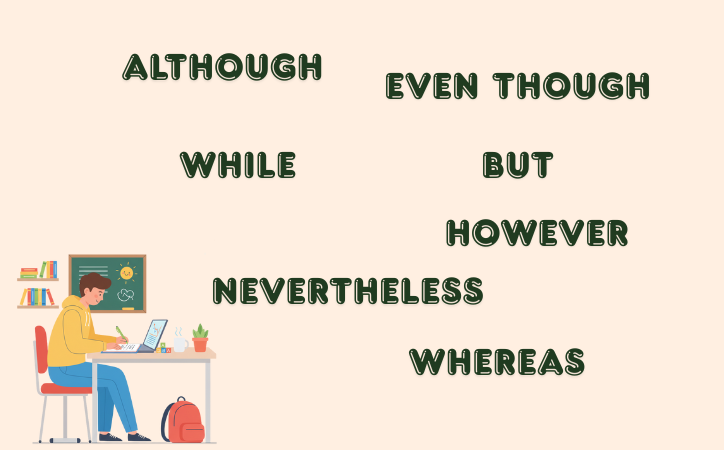
Khi học tiếng Anh, nhiều người thường xuyên bối rối khi phải sử dụng các liên từ nhượng bộ và tương phản (Conjunctions of Contrast). Bạn có thể đã biết đến những từ quen thuộc như although, but, however, nevertheless, nhưng lại hay mắc lỗi như kết hợp sai, đặt sai vị trí, hoặc không biết khi nào dùng trong văn nói, khi nào dùng trong viết học thuật. Kết quả là câu văn trở nên gượng gạo, thiếu tự nhiên, thậm chí làm giảm điểm trong các kỳ thi IELTS, TOEFL hay trong email công việc.
Bài viết này không chỉ dừng lại ở việc liệt kê công thức, mà sẽ giúp bạn hiểu sâu bản chất – áp dụng đúng ngữ cảnh – và luyện tập thực tế qua bài tập có phân tích chi tiết. Nhờ vậy, bạn sẽ không chỉ nhớ “học thuộc lòng” mà còn sử dụng thành thạo để câu văn logic, mạch lạc và ấn tượng hơn.
1. Vì sao bạn cần nắm vững liên từ nhượng bộ & tương phản?
Trong tiếng Anh, các liên từ nhượng bộ và tương phản như although, though, even though, while, whereas, however, nevertheless, yet, but… giúp bạn:
- Nói tự nhiên hơn: thể hiện sự đối lập, nhượng bộ, hoặc chuyển ý logic trong giao tiếp.
- Viết học thuật mạch lạc hơn: đặc biệt trong IELTS Writing, TOEFL, hoặc viết email công việc.
- Tránh lỗi ngữ pháp phổ biến: dùng sai chỗ giữa although và but, hoặc giữa however và nevertheless.
👉 Vấn đề thực tế: Nhiều người học “biết từ” nhưng không phân biệt được mức độ trang trọng, ngữ cảnh sử dụng, dẫn đến câu văn gượng gạo hoặc sai.
2. Phân loại chi tiết các liên từ thường gặp
Để không bị rối, bạn nên nhóm chúng theo chức năng và mức độ trang trọng:
(1) Dùng trong mệnh đề (trước S + V)
Although / Though / Even though: nhượng bộ, trang trọng vừa phải.
- Dùng trước một mệnh đề (S + V).
- Nghĩa: “mặc dù”.
- Even though nhấn mạnh hơn although/though.
📌 Ví dụ:
- Although it was raining, they went out.
- Even though he was tired, he kept working.
While / Whereas: nhấn mạnh sự đối lập giữa 2 vế.
- Dùng trước một mệnh đề.
- Nghĩa: “trong khi mà…” (chỉ sự đối lập).
- So sánh hai ý hoặc hai đối tượng trái ngược.
📌 Ví dụ:
- He is tall, while his brother is short.
- Whereas I like tea, my friend prefers coffee.
But / Yet
- Dùng để nối hai mệnh đề trong cùng một câu.
- Nghĩa: “nhưng, tuy nhiên”.
- Yet trang trọng và văn viết hơn but.
📌 Ví dụ:
- He is rich but he is not happy.
- She tried hard, yet she didn’t succeed.
Despite / In spite of
- Dùng trước danh từ, cụm danh từ, V-ing.
- Nghĩa: “mặc dù”.
- Nếu muốn theo sau là mệnh đề thì dùng cấu trúc: Despite/In spite of the fact that + S + V.
📌 Ví dụ:
- Despite the rain, they went out.
- In spite of being tired, he kept working.
- Despite the fact that he was tired, he kept working.
(2) Dùng nối câu (adverbial conjunctions)
However: phổ biến, trang trọng, hay dùng trong viết.
- Dùng để bắt đầu một câu, đứng sau dấu chấm phẩy “;” hoặc dấu chấm.
- Nghĩa: “tuy nhiên, thế nhưng”.
- Mang tính trang trọng hơn khi viết.
📌 Ví dụ:
- It was raining; however, they went out.
- I studied hard. However, I passed the test
Nevertheless / Nonetheless: nhấn mạnh tính “dù vậy” mạnh hơn however.
📌 Ví dụ:
He didn’t study hard; nevertheless, he passed the exam.
3. Lỗi thường gặp và cách sửa
❌ Although it was raining, but we went out.
👉 Không dùng đồng thời although và but.
❌ I studied hard, however I passed the test.
👉 However ngăn cách 2 câu ⇒ cần dấu ngăn cách (I studied hard. However, I passed the test.).
❌ Whereas bị nhầm nghĩa với while khi chỉ thời gian.
👉 Whereas chỉ dùng cho tương phản, không dùng cho nghĩa “trong khi” về thời gian.
4. Bài tập Liên từ Nhượng bộ và Tương phản
Dạng 1: Điền vào chỗ trống (Fill in the blanks)
Chọn đúng liên từ: although, though, even though, while, whereas, however, nevertheless, but, yet, still
- ______ she was very tired, she finished all the housework.
- He studied very hard. ______, he failed the test.
- She wanted to go out, ______ it was raining heavily.
- ______ Tom likes classical music, his wife prefers jazz.
- He is rich, ______ he is not happy.
- The plan sounded perfect. ______, it didn’t work.
- He is very shy, ______ his brother is outgoing.
- She was ill. ______, she went to work.
- I wanted to buy the jacket, ______ I didn’t have enough money.
- They are twins, ______ they look very different.
Đáp án
- Although she was very tired, she finished all the housework.👉 Although + S + V → diễn tả sự nhượng bộ.
- He studied very hard. However, he failed the test.👉 However dùng nối hai câu độc lập.
- She wanted to go out, but it was raining heavily.👉 But dùng trong cùng câu, nối 2 mệnh đề.
- While Tom likes classical music, his wife prefers jazz.👉 While/Whereas nhấn mạnh sự đối lập giữa 2 chủ thể.
- He is rich, yet he is not happy.👉 Yet = but, thường mang sắc thái hơi bất ngờ.
- The plan sounded perfect. Nevertheless, it didn’t work.👉 Nevertheless/Nonetheless → “dù vậy”.
- He is very shy, whereas his brother is outgoing.👉 So sánh 2 người trái ngược.
- She was ill. Still, she went to work.👉 Still = mặc dù vậy, nhưng.
- I wanted to buy the jacket, but I didn’t have enough money.👉 Phủ định trực tiếp.
- They are twins, yet they look very different.👉 Nhấn mạnh sự bất ngờ.
Dạng 2: Sửa lỗi sai (Error correction)
Mỗi câu có một lỗi sai về cách dùng liên từ. Hãy sửa lại cho đúng.
- Although it was raining, but we went out.
- I studied hard, however I passed the test.
- Whereas she was tired, but she still cooked dinner.
- He is poor. Nevertheless he has no money.
- While he was reading, and she was cooking.
- Even though of the rain, we decided to play football.
- She wanted to buy the dress. But however, it was too expensive.
- He likes pizza, whereas his brother also likes pizza.
- Though he is tall, yet he can’t play basketball well.
- I wanted to help her, but nevertheless she refused.
Đáp án
- ❌ Although it was raining, but we went out.✅ Although it was raining, we went out.👉 Không dùng cùng lúc although và but.
- ❌ I studied hard, however I passed the test.✅ I studied hard. However, I passed the test.👉 However phải đứng đầu câu độc lập.
- ❌ Whereas she was tired, but she still cooked dinner.✅ Whereas she was tired, she still cooked dinner.👉 Không dùng but thêm vào sau whereas.
- ❌ He is poor. Nevertheless he has no money.✅ He is poor. Nevertheless, he is happy.👉 Nevertheless phải đối lập ý trước, không trùng nghĩa.
- ❌ While he was reading, and she was cooking.✅ While he was reading, she was cooking.👉 Không cần and.
- ❌ Even though of the rain, we decided to play football.✅ Even though it was raining, we decided to play football.👉 Even though phải theo sau là S + V, không theo sau of.
- ❌ She wanted to buy the dress. But however, it was too expensive.✅ She wanted to buy the dress. However, it was too expensive.👉 Không dùng but và however cùng lúc.
- ❌ He likes pizza, whereas his brother also likes pizza.✅ He likes pizza, and his brother also likes pizza.👉 Whereas phải thể hiện sự đối lập, ở đây lại giống nhau.
- ❌ Though he is tall, yet he can’t play basketball well.✅ Though he is tall, he can’t play basketball well.👉 Không kết hợp though và yet.
- ❌ I wanted to help her, but nevertheless she refused.✅ I wanted to help her, but she refused.👉 Chỉ cần but hoặc nevertheless, không dùng cả 2.
Dạng 3: Viết lại câu (Rewrite sentences)
Viết lại câu sau, dùng liên từ nhượng bộ hoặc tương phản khác để giữ nguyên nghĩa.
- It was raining. We went out.
- He is rich. He is not happy.
- I studied hard. I didn’t pass the exam.
- She was tired. She finished her work.
- Tom likes football. His brother prefers basketball.
- She was ill. She still went to work.
- He tried his best. He didn’t succeed.
- She is beautiful. She is not confident.
- He was angry. He didn’t shout.
- They are twins. They look very different.
Đáp án
- It was raining. We went out.→ Although it was raining, we went out. / It was raining; however, we went out.
- He is rich. He is not happy.→ He is rich, but he is not happy. / Although he is rich, he is not happy.
- I studied hard. I didn’t pass the exam.→ Although I studied hard, I didn’t pass the exam. / I studied hard; nevertheless, I didn’t pass.
- She was tired. She finished her work.→ Though she was tired, she finished her work.
- Tom likes football. His brother prefers basketball.→ Whereas Tom likes football, his brother prefers basketball.
- She was ill. She still went to work.→ She was ill; however, she went to work.
- He tried his best. He didn’t succeed.→ Even though he tried his best, he didn’t succeed.
- She is beautiful. She is not confident.→ Although she is beautiful, she is not confident.
- He was angry. He didn’t shout.→ He was angry, yet he didn’t shout.
- They are twins. They look very different.→ They are twins, but they look very different.
Dạng 4: Chọn đáp án đúng (Multiple choice)
Chọn một liên từ phù hợp nhất trong ngoặc.
- ______ (Although/But) it was late, she kept working.
- I was tired. ______ (However/But) I didn’t give up.
- She likes cats, ______ (whereas/although) her husband prefers dogs.
- He studied hard, ______ (nevertheless/but) he didn’t pass.
- ______ (Even though/Whereas) she was ill, she attended the meeting.
- He is tall, ______ (while/though) his brother is short.
- We were hungry. ______ (Still/But) there was no food left.
- He failed the test. ______ (Nevertheless/Whereas), he didn’t give up.
- She is very kind, ______ (but/although) sometimes she gets angry.
- ______ (Though/Whereas) it was expensive, I bought it.
Đáp án
- Although it was late, she kept working.👉 Although dùng trước mệnh đề.
- I was tired. However, I didn’t give up.👉 However nối hai câu độc lập.
- She likes cats, whereas her husband prefers dogs.👉 So sánh tương phản.
- He studied hard, nevertheless he didn’t pass.👉 Nhấn mạnh “dù vậy”.
- Even though she was ill, she attended the meeting.👉 Nhượng bộ mạnh mẽ hơn although.
- He is tall, while his brother is short.👉 So sánh hai đặc điểm đối lập.
- We were hungry. Still, there was no food left.👉 Still = nevertheless.
- He failed the test. Nevertheless, he didn’t give up.👉 Nhấn mạnh sự trái ngược với kỳ vọng.
- She is very kind, but sometimes she gets angry.👉 But dùng trong cùng câu.
- Though it was expensive, I bought it.👉 Though đầu câu nhượng bộ.
Dạng 5: Dịch câu Việt – Anh (Translation Practice)
Dùng liên từ nhượng bộ và tương phản.
- Mặc dù trời mưa, họ vẫn đi chơi.
- Anh ấy giàu có, nhưng không hạnh phúc.
- Cô ấy mệt, thế nhưng vẫn làm việc.
- Anh ta học chăm chỉ, tuy nhiên lại trượt kỳ thi.
- Trong khi John thích cà phê, thì Mary lại thích trà.
- Anh ấy ốm, tuy nhiên vẫn đi làm.
- Tôi muốn giúp cô ấy, nhưng cô ấy từ chối.
- Mặc dù giá cao, tôi vẫn mua chiếc áo.
- Anh ấy tức giận, nhưng không nói gì.
- Họ là anh em sinh đôi, nhưng trông rất khác nhau.
Đáp án
- Mặc dù trời mưa, họ vẫn đi chơi.→ Although it was raining, they went out.
- Anh ấy giàu có, nhưng không hạnh phúc.→ He is rich, but he is not happy.
- Cô ấy mệt, thế nhưng vẫn làm việc.→ She was tired, yet she kept working.
- Anh ta học chăm chỉ, tuy nhiên lại trượt kỳ thi.→ He studied hard. However, he failed the exam.
- Trong khi John thích cà phê, thì Mary lại thích trà.→ While John likes coffee, Mary prefers tea.
- Anh ấy ốm, tuy nhiên vẫn đi làm.→ He was ill. Nevertheless, he went to work.
- Tôi muốn giúp cô ấy, nhưng cô ấy từ chối.→ I wanted to help her, but she refused.
- Mặc dù giá cao, tôi vẫn mua chiếc áo.→ Although it was expensive, I bought the shirt.
- Anh ấy tức giận, nhưng không nói gì.→ He was angry, but he didn’t say anything.
- Họ là anh em sinh đôi, nhưng trông rất khác nhau.→ They are twins, yet they look very different.
5. Mẹo áp dụng thực tế để không bị quên
- Trong giao tiếp hàng ngày, ưu tiên but, though, yet, while.
- Trong bài viết học thuật hoặc email công việc, ưu tiên although, however, nevertheless, whereas.
- Hãy nhớ:
- Although/though đi trước S + V.
- However/nevertheless đi đầu câu, sau dấu chấm hoặc chấm phẩy.
- But dùng giữa 2 mệnh đề cùng câu.
Kết luận
Liên từ nhượng bộ và tương phản không chỉ là “từ vựng” mà là chiếc chìa khóa để diễn đạt tư duy logic trong tiếng Anh.
- Nắm rõ loại từ – vị trí – mức độ trang trọng.
- Tránh lỗi kết hợp sai.
- Luyện tập bằng bài tập sát thực tế để nhớ lâu và áp dụng hiệu quả.
👉 Nếu bạn đang ôn IELTS, TOEIC hoặc cần viết email công việc, hãy tập thói quen dùng đa dạng liên từ thay vì chỉ lặp lại but hay although. Điều đó giúp bài viết và cách nói của bạn chuyên nghiệp và tự nhiên hơn hẳ


0 Comments